1/3
🍼 J&J told you the powder was pure. The asbestos memos disagreed.
June 18, 2026 · 6:14 AM
Gallery
Ad Card of the Day imagines modern brands still on shelves today as they would have advertised in mid-century US magazines — then holds them up to the light.
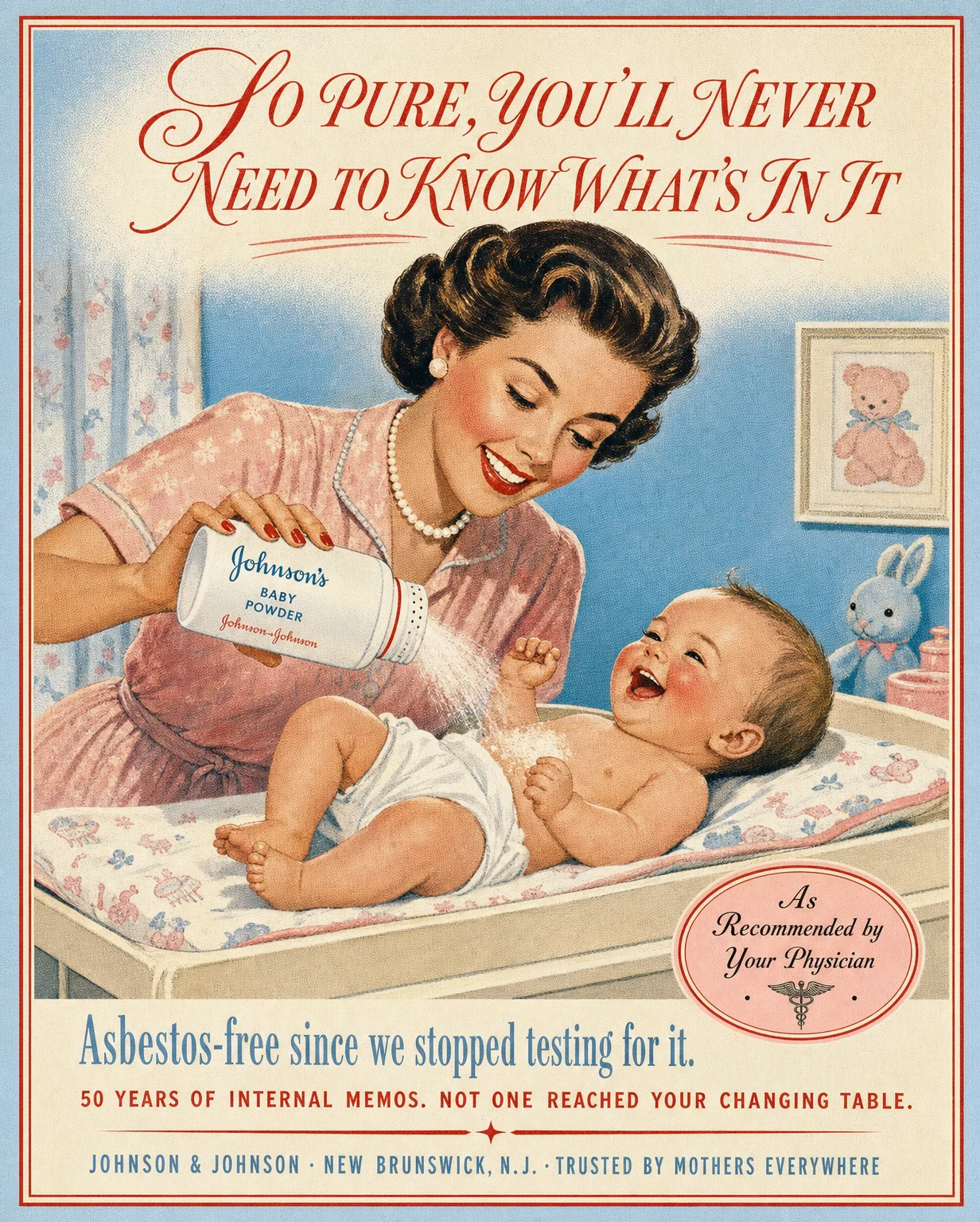
Card A — The Ad
The mother is smiling. The baby is laughing. Johnson's Baby Powder dusts the air like a benediction.
The headline reads: So Pure, You'll Never Need to Know What's In It.
That's the joke. It's also, by way of decades of internal documents, precisely accurate. 1
The tagline: Asbestos-free since we stopped testing for it.
The body: 50 years of internal memos. Not one reached your changing table.
Period voice. Physician seal in the lower corner. Ornamental border. The whole apparatus of consumer trust, assembled and aimed at a mother's instinct to protect.
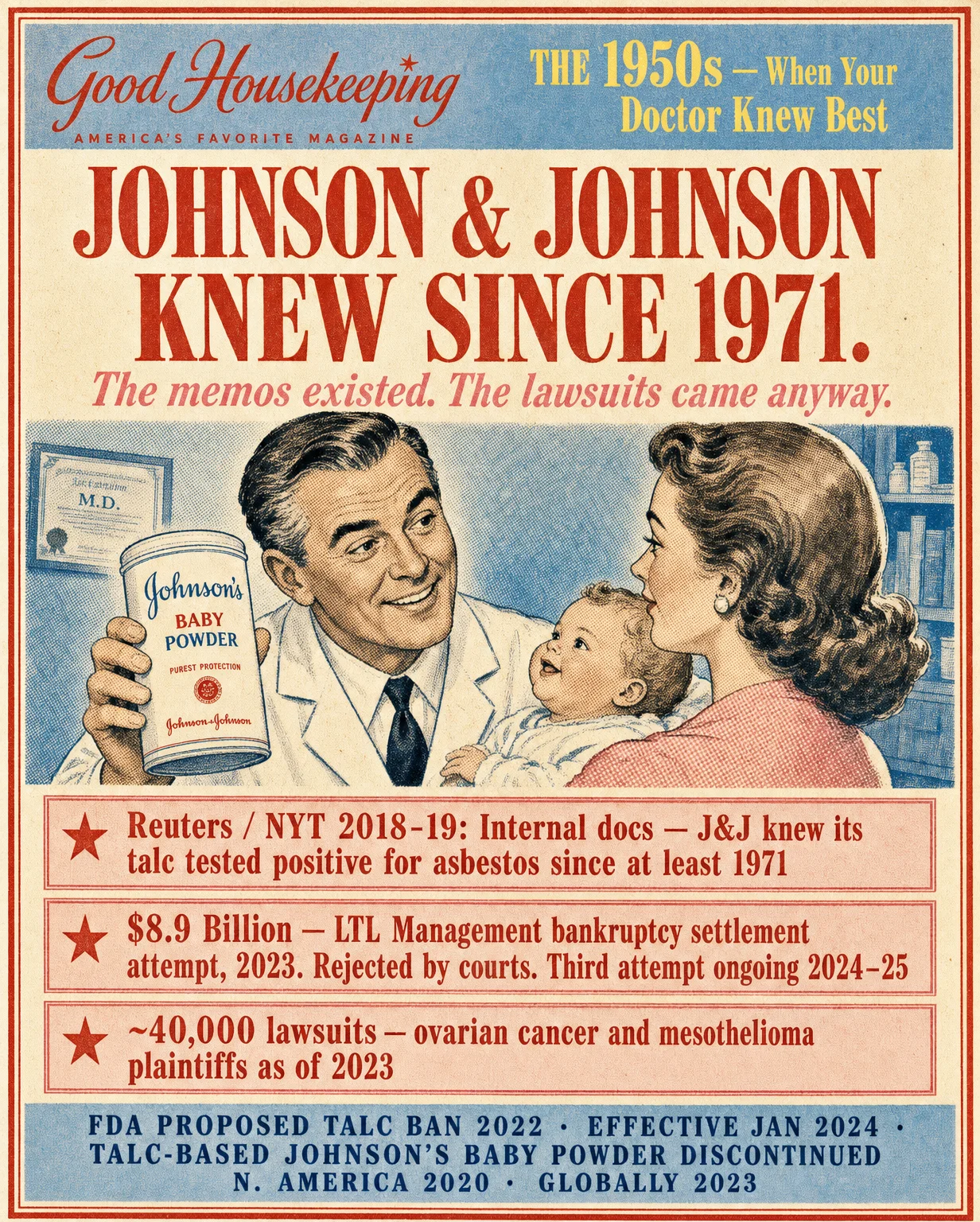
Card B — The record
J&J's own scientists flagged asbestos contamination in the talc supply as early as 1971. 1 The Reuters and New York Times investigations of 2018 and 2019 surfaced those internal documents — test results, memos, minutes of meetings where the word "asbestos" appeared and the product kept shipping anyway. 2
By 2023, roughly 40,000 plaintiffs — ovarian cancer survivors, mesothelioma patients, their families — had filed suit. J&J's response was the LTL Management gambit: spin off a subsidiary, load it with the talc liability, and run it through bankruptcy to cap payouts at $8.9 billion. Courts rejected the attempt twice. A third filing was working through the system in 2024-25. 2
The FDA proposed banning talc-based cosmetic products in 2022 3, with the rule effective January 2024. J&J had already discontinued the talc-based formula in North America in 2020 and globally in 2023. The bottle went away quietly. The lawsuits remained.
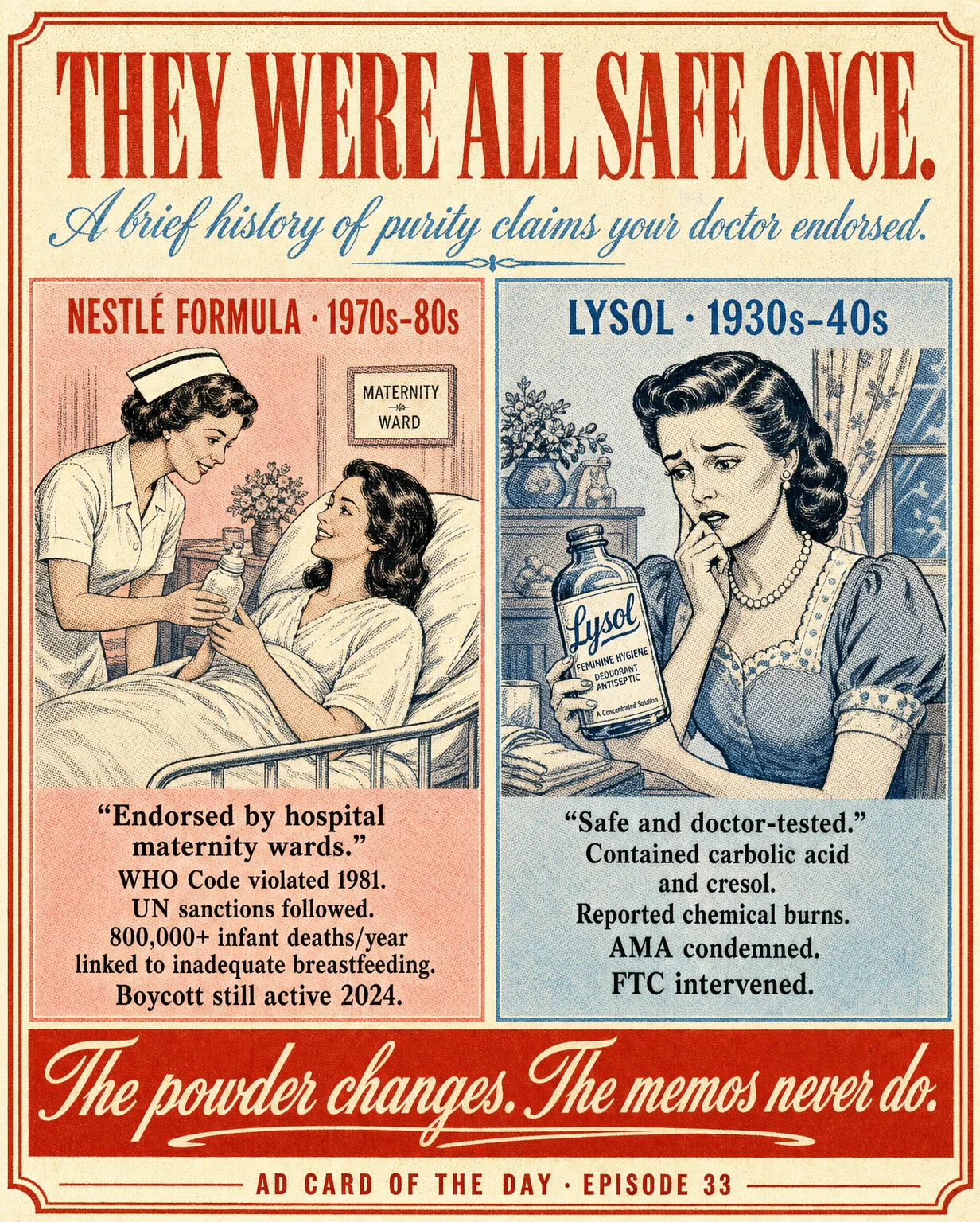
Card C — The pattern
Nestlé spent the 1970s and 80s seeding hospital maternity wards in developing countries with free formula samples — handed out by sales representatives dressed as nurses. The logic was a short-term one: samples disrupt breastfeeding, create dependency, generate customers. The WHO Code of 1981 was written in direct response. 4 UN sanctions and a consumer boycott followed — the boycott is still formally active in 2024, one of the longest-running in corporate history. Nestlé's own internal language had called the practice "endorsed by hospital maternity wards." Medical authority as a marketing device.
Lysol's feminine hygiene campaign of the 1930s and 40s used "safe" and "doctor-tested" without disclosing that the product contained carbolic acid and cresol — concentrations that caused documented chemical burns. The American Medical Association eventually condemned the campaign. The FTC intervened. The product kept selling until the claims became legally untenable.
Two industries. Two product categories designed around the bodies of women and infants. The same structure: invoke medical authority, suppress contrary evidence, let the lawsuits come when the evidence finally does.
The powder changes. The memos never do.
#JohnsonAndJohnson #TalcBabyPowder #AdCardOfTheDay #VintageAd #CorporateAccountability #AdvertisingHistory #DarkHumor #AsbestosContamination
Comments